Many people have heard the name Marie Laveau. Some know that she was born in New Orleans in the early nineteenth century. Most associate her with Voudou. However people first encounter her, one thing is usually certain... Marie Laveau is viewed as a mysterious historical figure.
A lot of the mystery is rooted in not really knowing what to believe. With Marie, it is not always easy to say where the record ends and the myth begins. Some narratives of her come from documentary evidence. Others come from folktales, rumors, songs, and stories that were simply made up on the spot.
However, not a lot of attention has been paid to the things in her life...that is the objects, places, landscapes...and even the people in her life to a degree. As an archaeologist, I know that the written record is not the only way to approach the past. Archaeology opens the door for us to pay attention to the material world around us. It asks us to consider how people use, keep, inherit, lose, create, and remember things.
The framework for this book draws from several overlapping approaches including: landscape archaeology’s attention to movement and place; object histories that show how a single thing can carry meaning across time and space, and what that can reveal about a person; and critical approaches to the archive that ask how we write about lives not quite visible in official records.
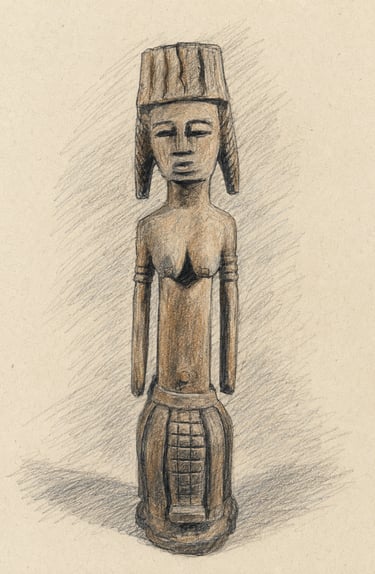
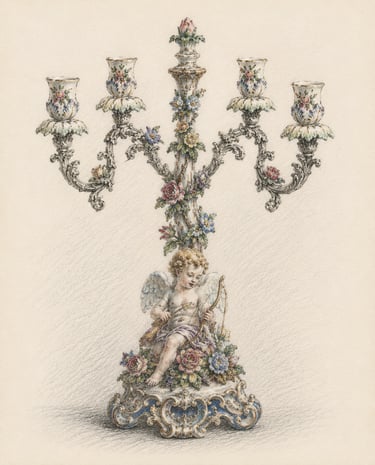
So, for this project, I chose three objects that reveal different but connected aspects of Marie Laveau’s life and legacy: her house on St. Ann Street, a wooden Voudou figure, and a Dresden candelabra or vase. Each object offers a different entry point into Marie’s life and provides a unique look into into her world.
Click on the artifacts below, for more information.
The Artifacts
The House on St. Ann
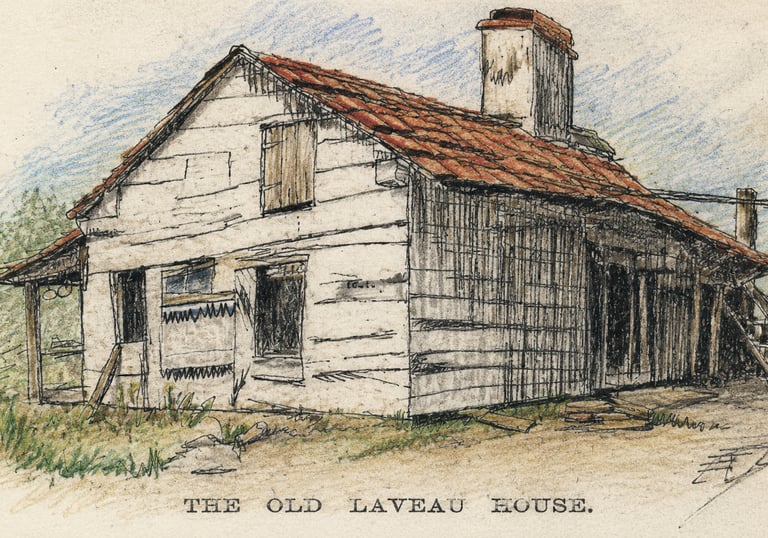
The Voudou Statue
The Vase
info@theworldofmarielaveau.com
© 2025. All rights reserved.